

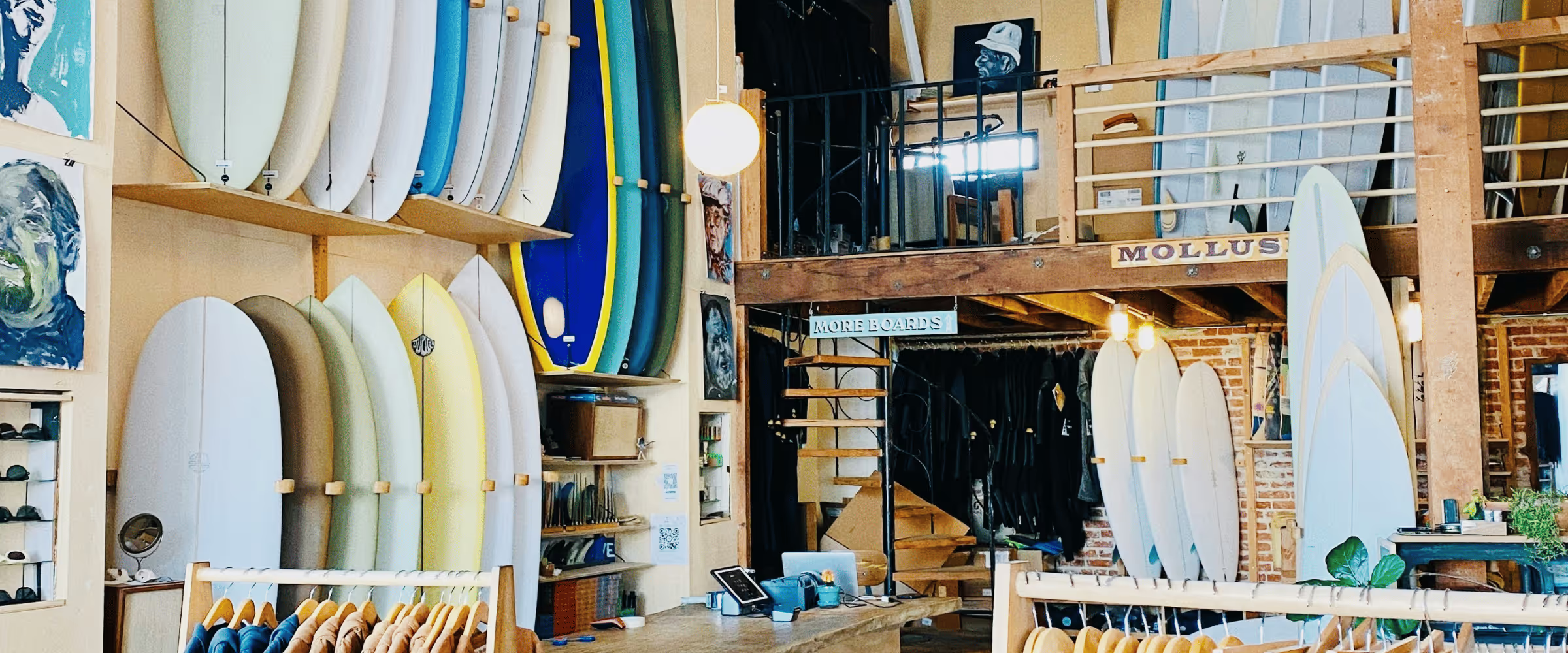
Salt hangs in the air along the Gold Coast, the kind that dries on your skin before you notice. Inside the surf shop off the Esplanade, wax dust clings to fingertips, and the floor carries a soft grit that never fully leaves. Locals have stepped through the same doorway for as long as most groms can remember, chasing a spare leash, a fin key, or a board that feels right for a particular tide.
The owner is third-generation, raised on early mornings and late closes, and the simple rule that you don't promise what you can't stand behind. For years, the shop's street address never changed, but its online identity did. Different links, old handles, the wrong pins on maps, messages going to nowhere.
Now the shop has a digital address that matches its home: a .surfersparadise domain. It sounds like a small detail, yet it hits like fresh paint on the sign out front. This story is about legacy and trust, and why a permanent online address can matter as much as the one on the corner.
Surfers Paradise is loud and bright, and it moves fast. Cafes turn over, retail signs change, and a "new opening" banner never feels rare. That's why staying put matters. When a surf shop holds the same spot for two decades, it signals something plain: you can find them when you need them.
People don't just remember a name, they remember a place. They remember the smell of neoprene and sunscreen near the rack. They remember the bell on the door. They remember where to stand when they're holding a board under one arm and a kid's hand in the other. Over time, that repetition becomes a kind of local map.
Visitors feel it too, even if they can't explain it. A shop that's still here after all these seasons reads as steady. It feels like a safe bet for rentals, repairs, and honest advice, especially in a beachfront strip where plenty of stores aim at quick sales.
There's also a practical side. On a busy beach day, directions get simple. "Down Cavill, then left at the shop" works better than a street number. In Surfers Paradise, where the skyline can make everything look the same, a familiar storefront becomes a marker people use without thinking.
A long-standing storefront doesn't just sell gear, it sells certainty. You know where it is, and you know it'll be open.
The shop's history isn't framed as a museum piece, it's mixed into the daily work. Old contest posters curl at the corners near the back room. A faded photo of a family swell session sits by the register, half hidden behind a stack of tail pads. The repair area out back smells like resin and patience, and the dings waiting on the rack tell their own stories.
Third-generation ownership also changes how advice sounds. Recommendations come from a long memory of what breaks, what lasts, and what suits the local conditions. The owner learned from a parent, who learned from a parent, and the knowledge didn't come from a sales script.
Regulars drop in even when they don't need anything. They bring their kids, pointing at the same board brands they once begged for. The shop knows their names, and it knows their bad habits too, like the surfer who always loses wax, or the one who snaps fins on shallow days.
Heritage, here, stays practical. It shows up in honest sizing, fair repairs, and the quiet confidence of a store that plans to be here next week, next season, and beyond.
Surfers Paradise draws first-timers every day. Many arrive with sunburned shoulders and big plans, then realize the beach can be crowded and the water can feel serious. They need quick help, and they need it from someone they trust.
At the same time, returning families treat the shop like part of the trip. They come back each visit, not because it's trendy, but because it's familiar. A fixed surf shop becomes a ritual, like morning coffees or the walk along the foreshore.
One afternoon, a couple of locals stand outside, scanning the water. One says, "Meet you at the shop," and nobody asks which one. That line only works when a place has earned it.
That's what two decades buys you: the right to be a reference point.
A shop can be rock-solid in person and still feel hard to find online. Over time, digital addresses scatter. A social handle changes. A link on an old flyer still floats around. Someone tags the wrong profile. A map listing points to a nearby corner, so visitors wander with boards under their arms, getting more annoyed with every step.
For a surf shop, those small misfires add up fast. A missed message can mean a lost rental. A wrong pin can mean a family gives up and buys elsewhere. A fake profile can confuse newcomers who don't know the difference, and it can damage trust in minutes.
The owner felt that pressure more than once. Someone would walk in and say they tried to call but reached a dead number. Another would say they clicked a link and got a page that didn't look right. The shop stayed in the same place, yet the online trail felt like it kept moving.
That's the odd mismatch of modern word-of-mouth. People still talk the same way, but the follow-through is digital. If the online identity looks messy, even loyal customers hesitate, and new customers bounce.
A clean web address doesn't fix everything, but it does one important thing: it puts the right sign above the door, online.
Online trust is thin, because anyone can copy a logo and a name. Small doubts show up fast. A long, random web address feels off. A handle with extra underscores looks like an imitation. A link that doesn't match the shop name makes people pause.
And when you pause, you drift. That's how a respected local store loses a sale without ever knowing it happened.
Picture this: you search for the shop on your phone after a surf, hands still damp. Two similar names appear, and one link looks clean while the other looks like a leftover from an old campaign. In that moment, what would you click if you had only a few seconds between sets?
Even regulars aren't immune. People share screenshots, not street signs. If the screenshot looks confusing, the recommendation loses strength.
Surf culture runs on simple directions. Park here. Paddle out there. Take this bank on the right tide. The best advice sounds clear, because the ocean doesn't reward confusion.
A matching domain brings that same clarity to the online side. When the shop's name and its web address line up, referrals travel better. A friend can say, "Go to the shop's address," and the listener doesn't need a second explanation. It also helps on mobile, where typing mistakes happen easily and attention is short.
The owner wanted one place to point everyone. One address for bookings. One address for updates. One address that looks like the shop, sounds like the shop, and stays put like the shop.
The shift happened in a way that felt surprisingly personal. The owner claimed a .surfersparadise onchain domain, and the pride landed like repainting the shop sign after a long winter. It wasn't about chasing a trend. It was about matching the shop's reputation with a name that couldn't be mistaken.
Here's the part that matters for the record: Queensland Foundation TLDs are onchain, owned by kooky, and powered by freename. The owner liked that it reads like a place, not a product. It plants the flag in Surfers Paradise, right in the address itself.
That "address to match" idea is easy to underestimate until you run a long-standing local business. A surf shop's identity lives in conversations, quick recommendations, and trusted routines. A permanent digital address makes those routines easier to keep.
It also protects the shop's name in a simple way. When the shop owns the address, it controls where people land when they look it up. That control brings relief, because the owner no longer has to explain which link is real.
Think of it like the sign on the front window and the keys in your pocket. The shop controls the domain, and it works as the shop's digital address. It's meant to last, so the owner can build on it without fearing that a platform change will scramble everything.
For customers, the benefit is simple. Fewer mix-ups. Less second-guessing. A clearer path from "I need wax" to "I'm walking through the door."
For the business, it becomes a home base. The shop can point every post, flyer, and partnership back to one place. That makes the brand feel consistent, and consistency is what trust looks like online.
A third-generation surf shop doesn't get to fake its story. People know the family. They know who taught who, and which boards got passed down. That long memory creates a kind of accountability.
So when the owner saw the .surfersparadise domain written out, it clicked in a gut-level way. It looked like home.
One morning, a new batch of board tags came in. The domain sat under the logo, clean and simple. The owner stuck one on a rental longboard, stepped back, and felt the same satisfaction as lining up boards on a fresh rack. The address matched the place, and the place mattered.
Legacy isn't only about what you've done. It's also about making it easy for the next person to find you.
A surf shop doesn't need to act like a tech company to benefit from a strong domain. In fact, the best approach keeps the same tone the shop has always had: practical, local, and friendly.
The owner started small. The goal wasn't to plaster the address everywhere like an ad. The goal was to make it the default, so nobody had to guess.
That meant cleaning up the basics first. The shop aligned its map listings with the same spelling and the same domain. It also updated old bios and profiles that still floated around. Once the foundation looked consistent, the new address became a quiet signal: this is the real shop, in the real place, run by the same family.
The beauty is that none of this changes the in-store experience. Boards still sit on the wall. Wax still melts a little on hot days. Locals still wander in to talk swell. The domain just helps people arrive.
Consistency wins here, because repetition builds memory. The shop puts the .surfersparadise address on the front window, sized like a friendly nudge, not a billboard. It appears on receipts and repair tickets, so customers keep it without thinking. Stickers go out with rentals, and the domain sits beside the logo.
Lesson flyers carry the address in the same spot every time. Team rider cards include it for sponsors and parents. Email signatures use the same clean line, so suppliers and partner shapers know they're talking to the real shop. Even surf club banners, hung for community events, point back to one home online.
None of these touchpoints feel flashy. They feel normal, which is the point. The shop wants people to remember one address the same way they remember the doorway.
Once the shop had a dependable digital address, it used it like a community noticeboard. A short swell note goes up when the banks shift. Repair bookings get a clear form, so dings don't get lost in messages. A small local calendar lists grom clinics, board swap days, and beach cleanups, the kind of events that pull people together without making a fuss.
The owner also highlights nearby partners in a neighborly way. A café that opens early for dawn patrol gets a shout-out. A local shaper doing a limited run gets a feature. Those posts bring people back in person, which keeps the culture grounded in the streets and sand of Surfers Paradise.
Most importantly, the domain becomes the place to confirm details. If a rumor about hours spreads, the shop points to one address. If a visitor wants to know where to pick up a rental, the answer stays the same.
The shop didn't survive two decades by chasing noise. It survived by showing up, giving honest advice, and keeping its place on the street. Now its .surfersparadise domain carries that same steadiness online, so the name and the location finally line up.
Place matters, and names matter, especially in a town where so much changes. A permanent digital address makes it easier for the next generation to find the shop, whether they're searching from a hotel balcony or walking up from the beach with wet hair and sandy feet. Tomorrow morning, the owner will unlock the door as usual, and the new address on the window will sit there like it always belonged.

Queensland Foundation has secured the TLDs that belong to Queensland. Claim yours - once, forever.